
The White Wave · advertised in blue, 1830
Someone walks in. Looks at the wall. Says nothing.
That silence is why most walls end up beige. Not because anyone chose beige — because an empty beige wall doesn't cause silence. It doesn't cause anything.
The blue came first
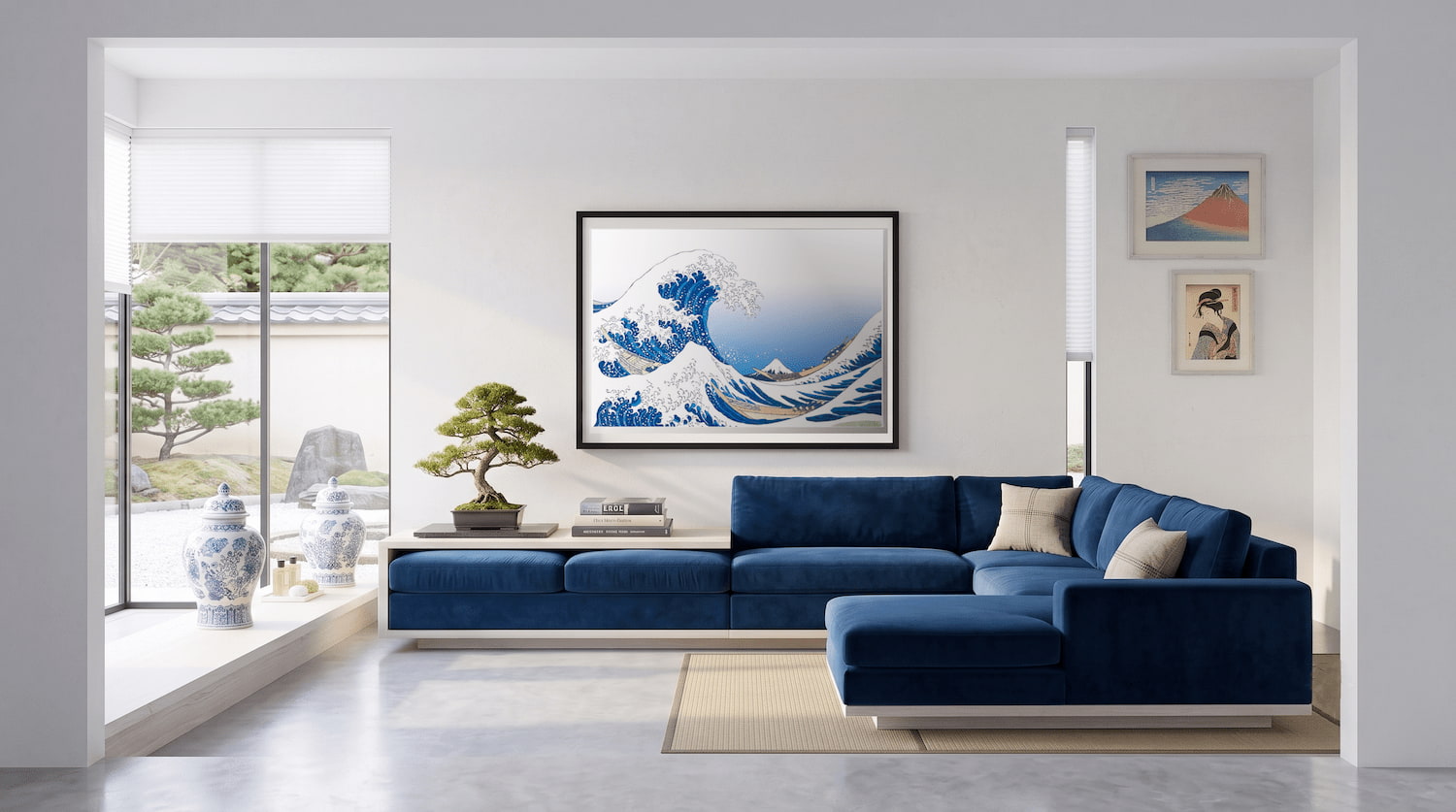
In 1830 Hokusai's Fuji series was advertised in blue — aizuri-e. The pigment had just arrived from Europe, and its Japanese name came from a misreading: bero-ai, from "Berlin."
The colour versions came later. Once the publisher was sure it would sell.
So this isn't a filter applied to an old print. It's the beginning.
There are forty-six. This one was chosen.
The title says thirty-six. Hokusai added ten more once he saw the series was selling.
This is the one everyone knows. This version keeps the blue — Prussian blue in the wave, fading into white where the sky used to be.
Not a reproduction. A choice.
The list is the door.
What's behind it is the real collection.
Every drop before anyone else. Where each piece came from, and why it was chosen.
So when someone asks — and someone always does — you're not guessing. Not a newsletter. A private room.
DON'T DECORATE. INVADE.
Privacy Policy · Terms of Service
Follow the Drops
Instagram · Global | Instagram · BR | Pinterest
Av. Paraná, 4103 · Foz do Iguaçu · PR · 85860-290 · Brasil
© 2026 Catalysis Culture. All rights reserved.